

5 Documents You May Need to Have Notarized (and What Ontario Law Actually Requires)

A notary’s stamp can seem like a formality until a document gets rejected at the airport, the bank, or a government office. Knowing which documents need a notary, and which only need a witness or a commissioner, can save you time, stress, and legal trouble later.
Two terms are often confused. Notarizing a document means a notary public verifies your identity and signature, or certifies that a copy is a true copy of the original. Commissioning a document means you swear or affirm that its contents are true in front of a commissioner for taking affidavits. In Ontario, lawyers are commissioners, and many are also notaries public, so both can usually be done in one appointment.
Here are five types of documents that often need one or the other.
1. Travel Consent Letters for Children
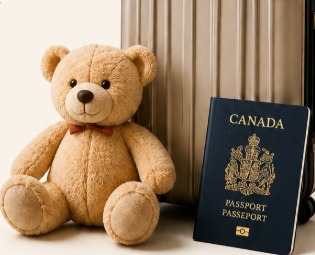
If your child is travelling abroad alone, with only one parent, or with grandparents, friends, or a school group, airlines and border officials may ask for a consent letter. The letter shows that the parent or parents who aren’t travelling have agreed to the trip.
The Government of Canada strongly recommends a consent letter in these situations. It is not always legally required, but officials can question a child’s travel without one. A letter signed in front of a notary or lawyer carries more weight because it verifies who signed it. This is especially important for separated or divorced parents, whose custody or parenting orders may also affect travel. A simple letter today can save a trip tomorrow
2. Affidavits
An affidavit is a written statement of facts that you swear or affirm is true. Affidavits are used in court proceedings, family law matters, estate applications, real estate transactions, and many government applications.
In Ontario, an affidavit must be sworn or affirmed before a commissioner for taking affidavits. Lawyers can act as commissioners. Statutory declarations, which are used to confirm things like a change of name, a lost document, or facts relating to a property sale, are commissioned in the same way. If the affidavit will be used outside Canada, it may also need to be notarized, and possibly authenticated, before a foreign authority will accept it.

3. Powers of Attorney
A power of attorney gives someone you trust the authority to act on your behalf. Ontario has two main types. A Continuing Power of Attorney for Property covers your finances, such as banking, investments, and real estate. A Power of Attorney for Personal Care covers decisions about your health care, housing, and personal matters if you become unable to make them yourself.
Under Ontario law, a power of attorney does not need to be notarized to be valid. It must be signed in front of two qualified witnesses, and certain people, including your spouse or partner, your children, and the person you are appointing, cannot act as witnesses. However, banks and other institutions often ask for a notarial copy, which is a copy certified by a notary as a true copy of the original. This lets your attorney act without handing over the original. Having a lawyer prepare and witness your power of attorney also helps show that it was properly signed and that you understood what you were signing.

4. Real Estate Documents
In Ontario, land transfers and mortgages are registered electronically by lawyers, so the deed itself isn’t notarized the way it may be in other jurisdictions. That doesn’t mean notarial services play no role in a real estate deal.
Many real estate transactions involve sworn statutory declarations about spousal status, residency, or the history of a property, and these must be commissioned. Notarization matters most when a buyer or seller is outside Ontario. For example, an owner living abroad may need to sign a power of attorney or authorization before a notary so that a representative can complete the sale here. The reverse is also true: Ontario residents dealing with property in another country, such as the Caribbean, will often need documents notarized here before they can be used there.

5. Adoption Documents
Adoption involves some of the most important documents a family will ever sign. Consents to adoption, affidavits, and supporting materials must meet strict requirements, and in many cases the person giving consent must receive independent legal advice.
International adoptions add another step. Foreign authorities commonly require documents to be notarized in Canada and then authenticated for use abroad. Since Canada joined the Hague Apostille Convention in January 2024, documents going to other member countries can be certified with a single apostille, which replaces the older multi-step legalization process. Getting the paperwork right at the start helps avoid delays in an already emotional process.

Getting It Done Right
Notarizing and commissioning the right documents now can save time, stress, and legal trouble later. At Augustine Williams Law Professional Corporation, our lawyers act as notaries public and commissioners for taking affidavits. We can help with:
- notarizing documents and certifying true copies
- commissioning affidavits and statutory declarations
- preparing documents for use in Canada or abroad
Contact us
Call +1 (905) 410-4607, email info@awlawpc.ca, or send us a DM on Instagram.
DISCLAIMER: This article provides general information only and is not legal advice. Requirements vary depending on the document and where it will be used. Please contact us about your specific situation.